
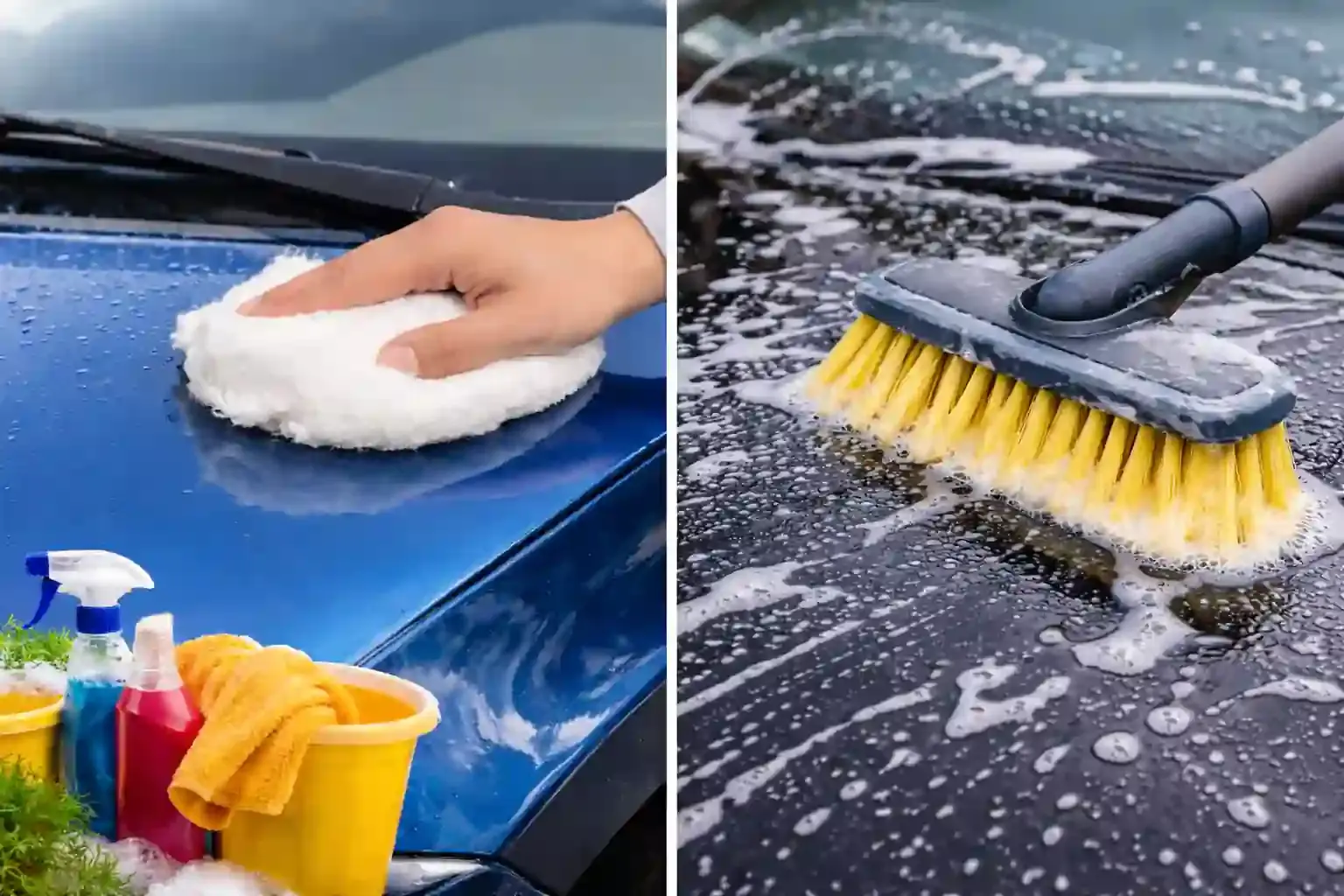
What Should You Use to Wash Your Car? Sponge vs Brush Guide for a Scratch-Free Wash
If you live in Fresno, you already know how quickly your car gets dirty.
One windy afternoon near Woodward Park or a commute down Highway 41 is enough to coat your car in a layer of dust and road grime. Most people grab whatever is nearby- a sponge, a dish brush, an old bath towel- and start scrubbing. It feels productive. But here is the problem: that well-intentioned wash might be slowly destroying your paint without you ever noticing.
Swirl marks, dull paint, and micro-scratches are rarely caused by one bad wash. They build up over months of using the wrong tools, the wrong soap, or the wrong technique. By the time you see the damage in direct sunlight, it has already been done.
So what should you use to wash your car the right way?
In this guide, we break down the exact tools, soaps, and methods that professional detailers use every day and the common mistakes that are silently damaging vehicles across the Central Valley. Whether you wash your car at home or are considering professional detailing, this guide will help you make smarter decisions that protect your paint and preserve your car’s value.
Quick Answer: What Should You Use to Wash Your Car?
If you want the short answer, here it is:
- Use a microfiber wash mitt
- Use pH-neutral car wash soap
- Use the two-bucket method
- Do not use brushes on paint
- Dry with a microfiber towel
This method is what most professional detailers use, and it is the safest way to wash your car without scratching the paint.
Why Using the Wrong Tools Can Damage Your Car Paint
Most paint damage does not happen from accidents or weather. It happens during routine washing, and the culprit is almost always friction combined with trapped dirt.
Understanding Your Clear Coat
Every modern vehicle has a clear coat layer sitting on top of the base paint. This transparent layer is typically only 50 to 100 microns thick, roughly the width of a human hair. It is your car’s first line of defense against UV rays, oxidation, and surface scratches. Once it is compromised, the damage becomes visible and expensive to fix. This is why the tools you use during a simple wash matter far more than most people realize.
How Swirl Marks Form
Swirl marks are those faint circular scratches that appear under direct sunlight or showroom lighting. They are not random. They are almost always caused by washing with a dirty sponge, using circular scrubbing motions, or running your car through an automatic brush wash. Each pass traps microscopic dirt particles between the tool and your paint surface, dragging them across the clear coat like fine-grit sandpaper.
The Dirt Friction Problem
A regular sponge has a flat, dense surface. When it picks up dirt from your car, that dirt has nowhere to go. It sits on the face of the sponge and gets dragged across your paint with every stroke. A microfiber wash mitt works differently. Its deep fiber channels pull dirt away from the paint surface and trap it inside the mitt, dramatically reducing the friction that causes scratches.
Why Automatic Car Washes Are Risky
Brush-based automatic car washes are convenient but carry real risk. Those brushes contact hundreds of vehicles per day and can retain grit, sand, and debris from previous cars. When that brush hits your hood, it is not just washing your car. It is potentially dragging contaminants from every car that came before yours across your paint.
Understanding these risks is the first step to making better decisions about how you wash your vehicle.
What Should You Use to Wash Your Car? Sponge vs Brush vs Microfiber Mitt
When most people think about washing their car, they reach for whatever is under the sink, usually a sponge or a scrub brush. Both will remove dirt. But the way they remove it is what causes the damage.
The Problem With Sponges
A sponge feels soft, but its flat surface is a dirt trap. Once a sponge picks up grit from your car’s surface, it holds it right against the paint on every subsequent stroke. Think of it this way: dragging a dirt-loaded sponge across your hood is not much different from dragging a sheet of very fine sandpaper across it. You will not see the damage immediately, but under direct sunlight, those swirl marks will tell the whole story.
When a Brush Is Useful and When It Is Not
A brush is an excellent tool for wheels, tires, wheel wells, and floor mats. The firm bristles cut through brake dust and road grime that softer tools cannot reach. But those same bristles become a liability the moment they touch painted surfaces. Bristles are rigid; they trap dirt, and they concentrate pressure in small contact points, a combination that is nearly guaranteed to leave marks on your clear coat.
Why Microfiber Is the Right Choice for Paint
A microfiber wash mitt is specifically engineered for paint-safe washing. The thousands of tiny fiber loops lift and trap dirt particles deep inside the mitt, pulling them away from the paint surface rather than dragging them across it. The mitt also holds a generous amount of soapy water, which acts as a lubricating layer between the tool and your car. Less friction means less risk of scratches. This is why every professional detailer performing paint-safe exterior washing uses microfiber mitts as their standard tool, not sponges, not brushes.
Bottom Line
For painted surfaces, always use a microfiber wash mitt. Reserve brushes strictly for wheels and tires. Retire the sponge entirely if paint protection is your priority.
Car Wash Tools Comparison Table
| Tool | Safe for Paint | Risk of Scratches | Best Use |
|---|---|---|---|
| Sponge | Medium | Medium | Light dirt |
| Brush | Low | High | Wheels only |
| Microfiber Mitt | High | Low | Best for paint |
| Foam Cannon | Very High | Very Low | Pre-wash |
| Pressure Washer | High | Low | Rinse |
| Microfiber Towel | High | Low | Drying |
What Do You Need to Wash Your Car? (Beginner Supplies Checklist)
If you are wondering what you need to wash your car at home, here is a basic list:
- Two buckets
- Car wash soap
- Microfiber wash mitt
- Wheel brush
- Microfiber drying towel
- Hose or pressure washer
- Spray wax
- Glass cleaner
- Tire cleaner
- Detailing brush
This basic setup is enough for safe washing at home in Fresno, especially with the dust that builds up after windy days near Shaw Avenue or after a long commute on Highway 41.
What Do Professional Detailers Use to Wash Cars?
If you want to understand the safest way to wash a car, look at what professional detailers actually do, not what product labels suggest or what seems convenient.
Professional detailers follow a specific process designed around one goal: removing dirt without introducing new damage. Every step in that process exists for a reason.
Step 1: Pressure Washer Pre-Rinse
Before any soap or tool touches the paint, detailers use a pressure washer to blast loose dirt, dust, and debris off the surface. In Fresno’s dusty climate, skipping this step and going straight to washing with a mitt is like scrubbing your paint with the dirt still on it. The pre-rinse removes the bulk of surface contamination so the wash stage is not fighting through a layer of grit.
Step 2: Foam Cannon Pre-Wash
Many professional detailers apply a thick layer of foam to the entire vehicle before hand washing. This foam dwells on the surface for several minutes, chemically loosening dirt and lubricating the paint. When the foam is rinsed away, a significant amount of contamination goes with it, meaning the wash mitt makes fewer passes across the paint to achieve a clean result.
Step 3: Two Bucket Hand Wash
This is the core of professional hand washing. One bucket holds clean soapy water. The second holds plain rinse water. After washing each panel, the mitt is rinsed in the clean water bucket before being reloaded with soap. This prevents dirty water from contaminating the soap bucket and dragging grit back onto the paint, which is the single most common cause of wash-induced scratches.
Step 4: Wheel and Tire Cleaning
Wheels are always cleaned separately, using dedicated brushes and wheel-safe cleaners. Brake dust is chemically aggressive and should never be handled with the same mitt used on painted panels.
Step 5: Microfiber Drying
Air drying leaves water spots, especially with Fresno’s hard water. Detailers use large, plush microfiber drying towels or a controlled air blower to dry the vehicle immediately after rinsing. Some use a spray detailer during the drying process to add a light layer of protection and enhance gloss.
Step 6: Paint Protection Finish
Professional washes almost always end with a spray wax, sealant, or maintenance coating to restore the protective layer on the paint. This step is what separates a professional wash from a basic rinse and dry.
This six-step process is the standard used by Professional Auto Detailing in Fresno specialists and is the benchmark your home wash should aim to follow as closely as possible.
The Two Bucket Car Wash Method Explained
This method is the single most effective change you can make to your home washing routine.
Bucket 1: Clean soapy water
Bucket 2: Plain rinse water
How it works:
- Dip your microfiber mitt into the soap bucket
- Wash one panel of the car
- Rinse the mitt thoroughly in the rinse bucket to release trapped dirt
- Wring the mitt out completely
- Reload the mitt from the soap bucket
- Move to the next panel and repeat
The logic is simple but powerful. Every time you rinse your mitt in the dedicated rinse bucket, you are pulling dirt and grit out of the fibers before they have a chance to contaminate your clean soap water. Without this step, your soap bucket becomes progressively dirtier with every panel you wash, and every dip of the mitt reintroduces that contamination directly onto your paint.
Step-by-Step Guide: How to Wash Your Car Without Scratching Paint
Follow this process every time you wash your car at home for safe, scratch-free results.
Step 1: Park in the Shade
Never wash your car in direct sunlight. In Fresno’s summer heat, soap and water evaporate almost instantly on a hot surface, leaving behind water spots and soap residue that are difficult to remove. Find a shaded spot or wash early in the morning before temperatures rise.
Step 2: Rinse the Entire Car First
Use a hose or pressure washer to rinse the car from top to bottom before any tool touches the surface. This removes loose dust, bird droppings, and surface grit that would otherwise get dragged across your paint during washing. In Fresno, this step is especially important after windy days when fine dust settles across the entire vehicle.
Step 3: Apply Foam or Soap
If you have a foam cannon, apply a thick layer of foam and let it dwell for two to three minutes before rinsing. If you are washing by hand without a foam cannon, mix your car wash soap in your wash bucket according to the product instructions and proceed to the next step.
Step 4: Wash from Top to Bottom Using the Two Bucket Method
Start at the roof and work your way down. The lower panels collect the most road grime, so washing them last prevents dragging that contamination upward across cleaner sections. After each panel, rinse your mitt in the rinse bucket, wring it out, then reload it from the soap bucket before moving on.
Step 5: Clean Wheels and Tires Last
Wheels are the dirtiest part of your car. Always clean them last with a dedicated wheel brush and wheel cleaner. Never use your paint mitt on the wheels, as brake dust and road grime can contaminate the mitt and transfer to your painted panels.
Step 6: Final Rinse
Rinse the entire car thoroughly from top to bottom, making sure all soap is removed. Leftover soap residue can leave streaks and attract dust faster once the car is dry.
Step 7: Dry Immediately With a Microfiber Towel
Do not let the car air dry. Fresno’s hard water leaves mineral deposits on paint and glass that become increasingly difficult to remove over time. Use a large, plush microfiber drying towel and blot or drag gently from top to bottom. Avoid rubbing aggressively, as even during drying, friction can cause light scratches on a wet surface.
Step 8: Apply Spray Wax
Finish with a spray wax or quick detailer to restore the protective layer on your paint. This step takes less than five minutes and significantly extends the life of your paint protection between full detail sessions.
Dish Soap vs Car Wash Soap: What Should You Use?
This is one of the most common questions detailers hear, and the answer matters more than most car owners realize.
Dish soap is designed to cut through grease and food residue. It does that job very well, so well in fact that it also strips the wax, sealant, and protective coatings from your car’s paint. Most dish soaps sit between pH 8 and pH 10 on the alkaline scale. Quality car wash soaps are formulated to be pH neutral, sitting right around pH 7. That difference is significant. An alkaline cleaner does not just clean your paint. It degrades the protective layer sitting on top of it.
The other key difference is lubrication. Car wash soaps are specifically formulated to create a slick, lubricating foam that helps the wash mitt glide across the surface. Dish soap produces a thinner lather with far less lubricity, which means more friction between your mitt and your paint on every pass.
Using dish soap once in an emergency will not ruin your car. But using it regularly, especially under Fresno’s intense sun and heat, will accelerate paint oxidation and leave your clear coat exposed. If you have used dish soap recently and want to understand the full impact, our detailed guide on whether Dawn dish soap is safe for cars walks through exactly what happens to your paint and what steps to take afterward to restore your protection layer.
For regular washing, car wash soap is always the right choice.
When Should You Use a Brush to Wash Your Car?
A brush has a very specific role in car care, and painted surfaces are not part of it.
Use a brush for:
- Wheels and rims
- Tires
- Wheel wells
- Floor mats
- Truck bed liner
- Engine bay surfaces
Never use a brush on any painted panel. The bristles are too firm; they trap abrasive particles, and they apply concentrated pressure that the clear coat cannot handle without sustaining damage over time.
How to Dry Your Car After Washing Without Leaving Water Spots
Do not let your car air dry, especially in Fresno, where hard water mineral deposits are a real and persistent problem.
Best drying tools:
- Large plush microfiber drying towel
- Waffle-weave microfiber towel
- Automotive air blower
- Leaf blower on low setting
Dry the car immediately after the final rinse, starting from the roof and working downward. Use light dragging or blotting motions rather than aggressive rubbing. For door jambs, mirrors, and grilles where water collects, a quick pass with a leaf blower on low before towel drying prevents water from dripping back onto panels you have already dried.
Common Car Washing Mistakes That Damage Paint
These are the mistakes that cause the most paint damage, and most of them happen during what feels like a perfectly normal wash.
Using Dish Soap Regularly
Dish soap strips wax and protective coatings from your paint. One emergency use will not cause lasting damage, but regular use will leave your clear coat exposed to UV rays and oxidation, accelerating paint fade over time.
Washing in Direct Sunlight
In Fresno’s heat, washing in the sun causes soap and water to evaporate before you can rinse them away. The result is water spots, soap residue, and streaks baked onto your paint surface. Always wash in shade or during cooler parts of the day.
Using One Bucket Instead of Two
A single bucket means your wash water gets contaminated with dirt after the first panel. Every subsequent pass of the mitt reintroduces that dirt back onto your paint. This is one of the leading causes of swirl marks in home car washing.
Scrubbing in Circular Motions
Washing in circles concentrates scratches into the same circular patterns visible as swirl marks. Always wash in straight lines following the length of the panel, front to back on horizontal surfaces and top to bottom on vertical ones.
Using a Bath Towel to Dry
Bath towels are made from cotton loops that are too rough for automotive paint. Even a clean bath towel can leave light scratches during drying. Always use a microfiber drying towel designed specifically for vehicles.
Using the Same Mitt for Wheels and Paint
Brake dust contains metallic particles that are highly abrasive. Using the same tool on your wheels and your painted panels transfers those particles directly onto your clear coat. Always keep separate tools for wheels and paint.
Going Through Brush-Based Automatic Car Washes Regularly
Automatic brush washes are convenient but the bristles accumulate grit from every car they touch throughout the day. That grit gets transferred to your paint on every visit. Touchless washes are a safer automatic option, but hand washing remains the gold standard for paint protection.
Letting the Car Air Dry
Air drying leaves hard water mineral deposits on your paint and glass. In Fresno, where water hardness is significant, these deposits can etch into your clear coat over time if not addressed. Always dry the car immediately after rinsing.
How Often Should You Wash Your Car?
It depends on where you live and how often you drive.
General recommendations:
- Every 1 to 2 weeks if you live or drive in a dusty area
- Every 2 weeks for normal daily driving
- Monthly at minimum for low-mileage vehicles
- After every rain, as road runoff leaves contaminants on paint
- After road trips through dusty or debris-heavy routes
- Immediately after bird droppings or tree sap contact
Bird droppings and tree sap should be addressed as soon as possible. Both are chemically active. Bird droppings are acidic and tree sap hardens over time. Left on your paint in Fresno’s heat, either one can etch into your clear coat within days.
In Fresno, cars accumulate dust significantly faster than in cooler or more humid climates, so washing every one to two weeks during summer is the most practical schedule for maintaining your paint.
Regular washing is important, but it is only part of a complete maintenance plan. To understand how professional detailing fits into your overall schedule, including seasonal treatments, clay bar decontamination, and protection applications, read our guide on how often should you detail your car for a full seasonal maintenance breakdown specific to Fresno driving conditions.
Which Is Better: Automatic Car Wash or Hand Wash?
| Method | Safety | Cleaning Quality |
|---|---|---|
| Hand Wash | Very Safe | Best |
| Automatic Brush Wash | Low | Medium |
| Touchless Wash | Medium | Medium |
| Professional Detailing | Very Safe | Best |
Hand washing gives you complete control over what touches your paint and how much pressure is applied. It is the safest method available, and when done correctly using the two-bucket method and a microfiber mitt, it produces results that no automatic wash can match.
Car Wash vs Car Detailing: What Is the Difference?
Many people use these terms interchangeably, but they describe very different levels of service. A car wash removes surface dirt from the exterior. Car detailing goes much deeper, including paint decontamination, interior cleaning, scratch removal, paint correction, and the application of protective coatings like wax, sealant, or ceramic coating.
Washing your car regularly keeps it clean. Detailing is what protects it long-term and restores its condition when washing alone is no longer enough. If you want a full breakdown of what each service includes and when you need one versus the other, our guide on the difference between car wash and detailing covers everything in detail.
FAQs – What Should You Use to Wash Your Car
What kind of soap is safe for car paint?
pH-neutral car wash soap, automotive shampoo, and wash and wax soap are safe for car paint.
What can I use if I have no car shampoo?
You can use baby shampoo or a small amount of mild dish soap in an emergency, but not regularly.
Can I wash my automobile with laundry detergent?
No. Laundry detergent is too harsh and can remove wax and damage the clear coat.
What household cleaner can I use to clean my car?
You can use baby shampoo for the exterior, vinegar for glass, and baking soda for stains, but avoid strong cleaners.
What is a good substitute for car wash soap?
Baby shampoo, mild soap, or rinseless wash products are good substitutes.
What is the best thing to use to wash your car with?
A microfiber wash mitt with car wash soap and the two bucket method is the best way to wash a car safely.
Final Thoughts
Washing your car seems like one of the simplest things you can do for vehicle maintenance. And in some ways it is. But the difference between a wash that protects your paint and one that slowly damages it comes down to three things: the right tools, the right soap, and the right technique.
A microfiber wash mitt, pH-neutral car wash soap, and the two-bucket method are not complicated upgrades. They are small changes that make a real difference over the life of your vehicle, especially in Fresno, where dust, hard water, and intense UV exposure put your paint under constant stress year-round.
If you wash your car regularly using the methods in this guide, you will avoid the swirl marks, oxidation, and dull paint that affect so many vehicles in the Central Valley. Your car will hold its appearance longer, and when it is time to sell or trade in, that preserved condition will be reflected in its value.
That said, even the best home washing routine has its limits. Washing removes surface dirt, but it does not restore faded paint, remove embedded contaminants, or provide the kind of long-term protection that a professional treatment delivers. If you want to take your paint protection further, particularly against Fresno’s relentless heat, UV exposure, and hard water, our Ceramic Coating and Paint Protection in Fresno service is designed to give your vehicle a durable, professional-grade shield that makes every future wash easier and keeps your paint looking newer for significantly longer.
Start with the right wash. Protect it with the right coating. Your paint will thank you.